SEO for Catering Businesses: A Practical Guide
Seven practical steps to improve catering search visibility, attract relevant local enquiries and connect SEO performance to booked events.
SEO for catering businesses means helping people find your catering services in organic search and, where eligible, Google Maps. A strong strategy combines useful service pages, local business information, a technically sound website and measurement of real enquiries.
Why SEO matters for catering businesses
People searching for a wedding caterer, office lunch delivery or a staffed private event are making different decisions. Good catering SEO helps those buyers find the right menu, location, service style and enquiry information when they need it. The objective is qualified enquiries and booked events, not traffic for its own sake.
Start with the services you can deliver profitably, the places you actually serve and your available capacity. A company that specializes in large weddings should not optimize every page for inexpensive office lunch delivery simply because that phrase gets searches.
1. Set up and improve Google Business Profile
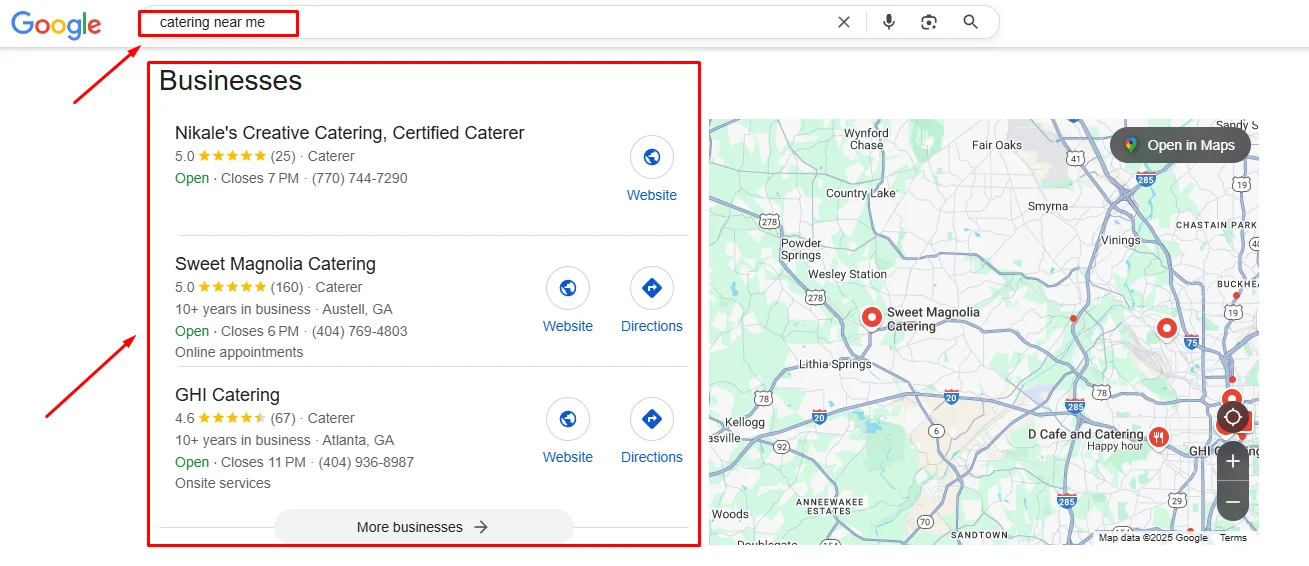
For eligible caterers, a verified Google Business Profile helps potential customers discover a local business through Search and Maps. Use your real business name, the most accurate available category, phone number, website, hours and relevant service details.
- If customers visit a staffed business location, represent that location accurately. If you operate as a service-area business and do not receive customers at your address, hide it and list the areas you serve.
- Upload recent photos of real food, events and your team where you have permission to do so.
- Request honest customer reviews without incentives and reply to feedback, including complaints.
- Keep contact information and holiday hours accurate.
Google explains that local results depend primarily on relevance, distance and prominence. A complete profile helps customers understand your services, but it does not guarantee a position in the map results. Read Google’s local ranking guidance and review guidelines.
2. Research catering keywords and match search intent
Look for phrases your ideal customers use. Search volume estimates can help you compare opportunities, but relevance and purchase intent are more important than a high-volume phrase aimed at another brand or a service you do not offer.
| Example search | Likely intent | Best page to target |
|---|---|---|
| catering near me | Find a nearby provider | Homepage or a useful local service page |
| wedding catering in Dallas | Compare wedding caterers | Wedding catering service page for the actual market |
| corporate catering near me | Order or request a business quote | Corporate catering page |
| buffet catering for events | Compare menus and service styles | Buffet catering page, if offered |
| how much does catering cost? | Research a budget | Pricing guide with realistic ranges and inclusions |
Use our catering SEO keyword research table to explore historical estimates, then verify relevant terms in your market with Keyword Planner, Search Console or another research tool. Tools measure demand differently; do not present their estimates as exact traffic forecasts.
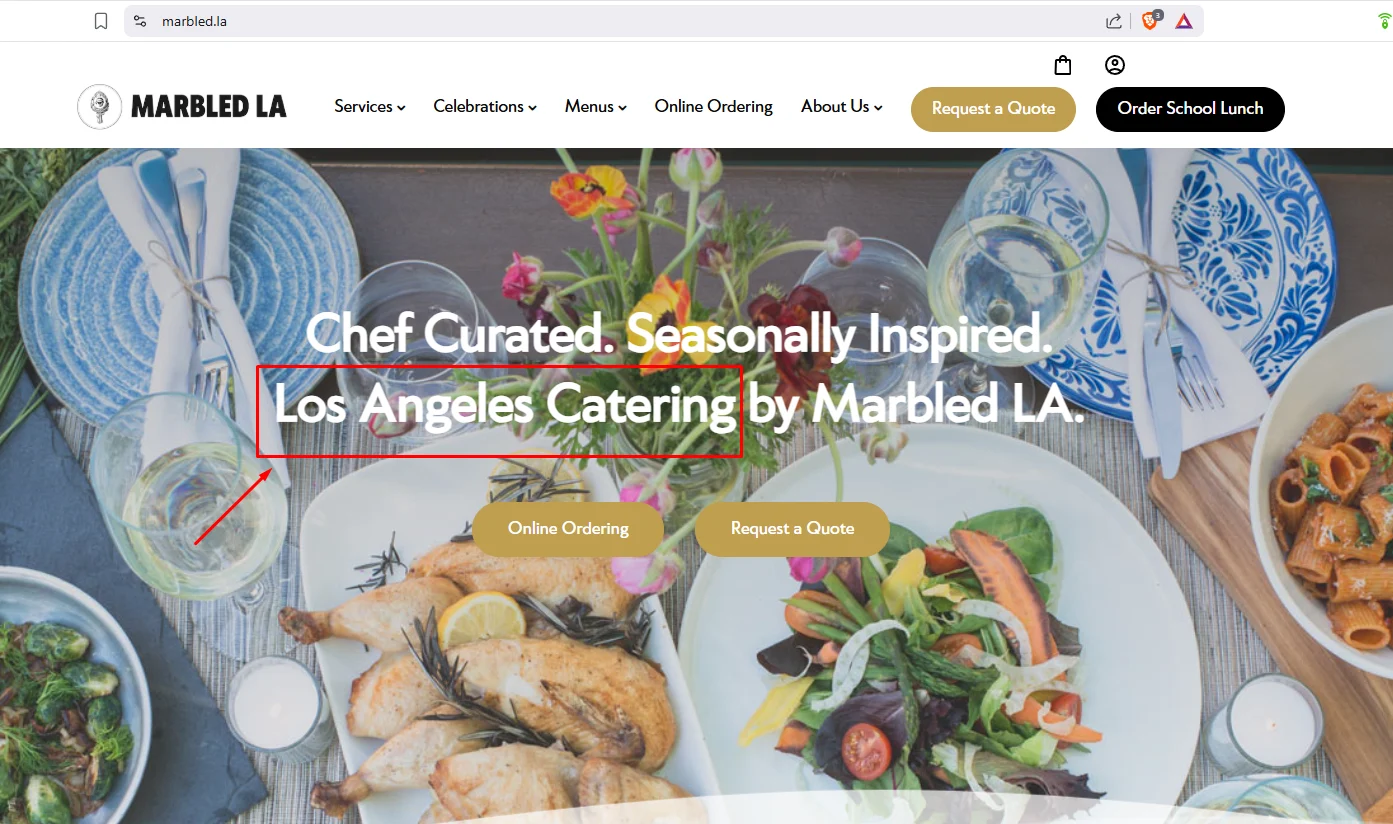
Write descriptive page titles, headings, body text and relevant image alt text naturally. There is no recommended 4–6% keyword density. Repetition for ranking rather than clarity is counterproductive; see the Google SEO Starter Guide.
Keyword examples from the original guide
The earlier version of this article included the following keyword phrases and estimated monthly search counts. Their source, location and measurement date were not recorded, so these figures are archived examples, not verified current search volumes. Recheck them in a suitable keyword tool before making decisions.
| Original example phrase | Original monthly-search estimate (unverified) |
|---|---|
| Wedding catering in [your city] | 3,600 |
| Corporate catering near me | 2,900 |
| Buffet catering for events | 1,800 |
| Private party catering services | 1,200 |
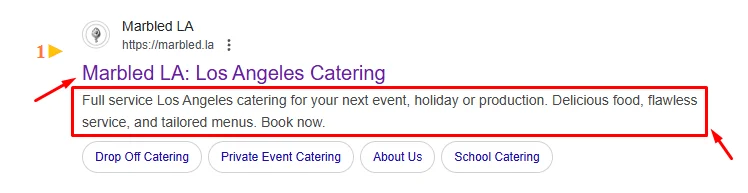
3. Create useful service pages and supporting content
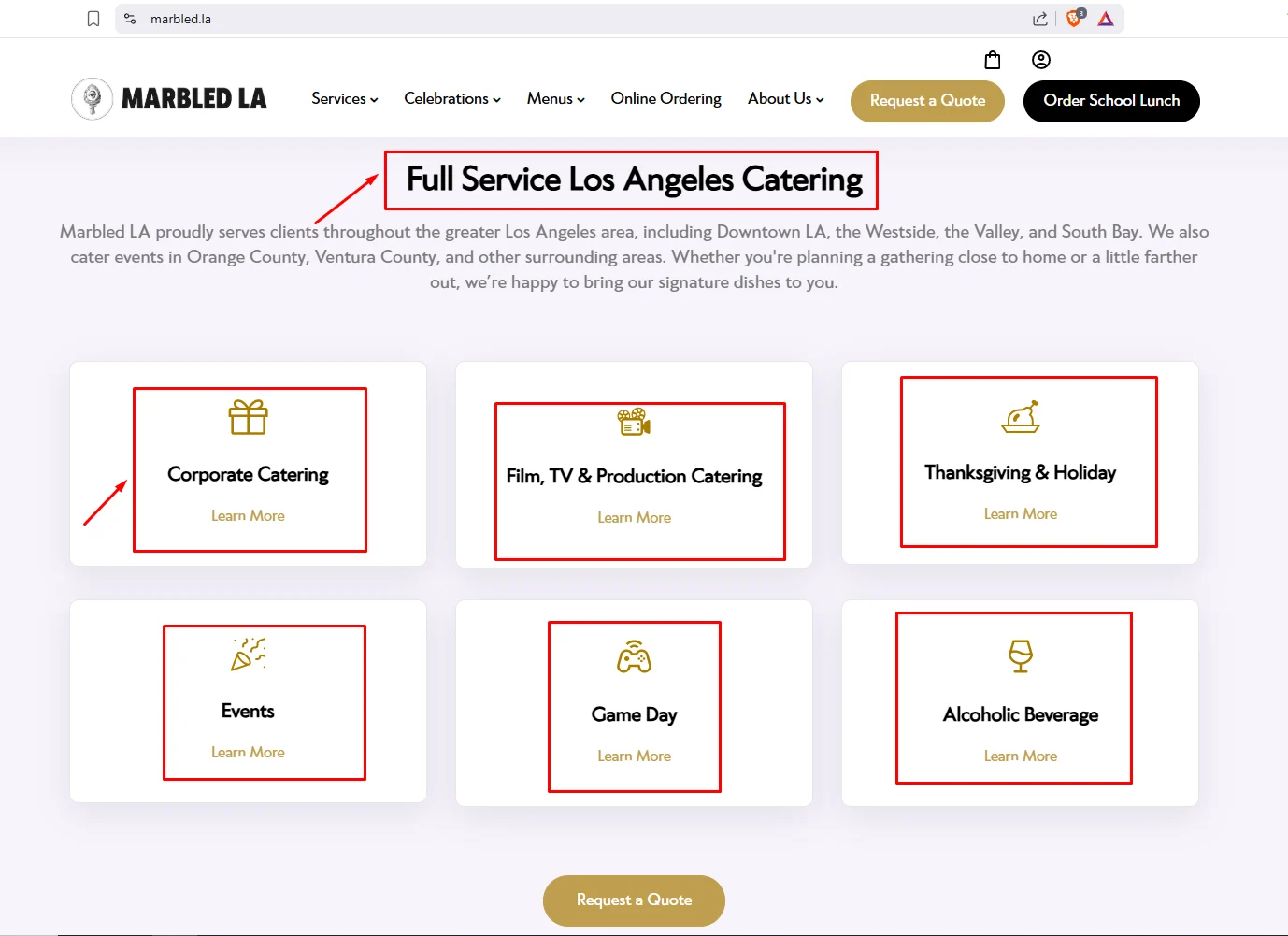
Build dedicated pages for genuine services such as wedding catering, corporate catering, private parties or drop-off meals. Each page should answer the buyer’s important questions, not merely describe the service with different keywords.
- Show your service area, event sizes, minimum orders, menu options and service styles.
- Explain what is included in delivery, staffing, setup and cleanup; give a price range or quote process where practical.
- Use real photographs, customer feedback with permission and relevant examples of your work.
- Make the next step obvious: request a quote, check availability or discuss a menu.
Support the service pages with practical resources about guest counts, choosing menus, budgeting and dietary requirements. Link to relevant services where it helps the reader. Publish new pages only when they offer distinct value; avoid dozens of nearly identical city pages.
Office lunch and meeting options → sample menus and minimums → delivery areas and lead times → dietary options → recurring orders → enquiry form. This structure answers buyer questions before the first call.
Google’s people-first content guidance is a useful editorial checklist. Explain your real capabilities and show accurate information rather than claiming expertise or results that cannot be substantiated.
4. Improve mobile and technical SEO
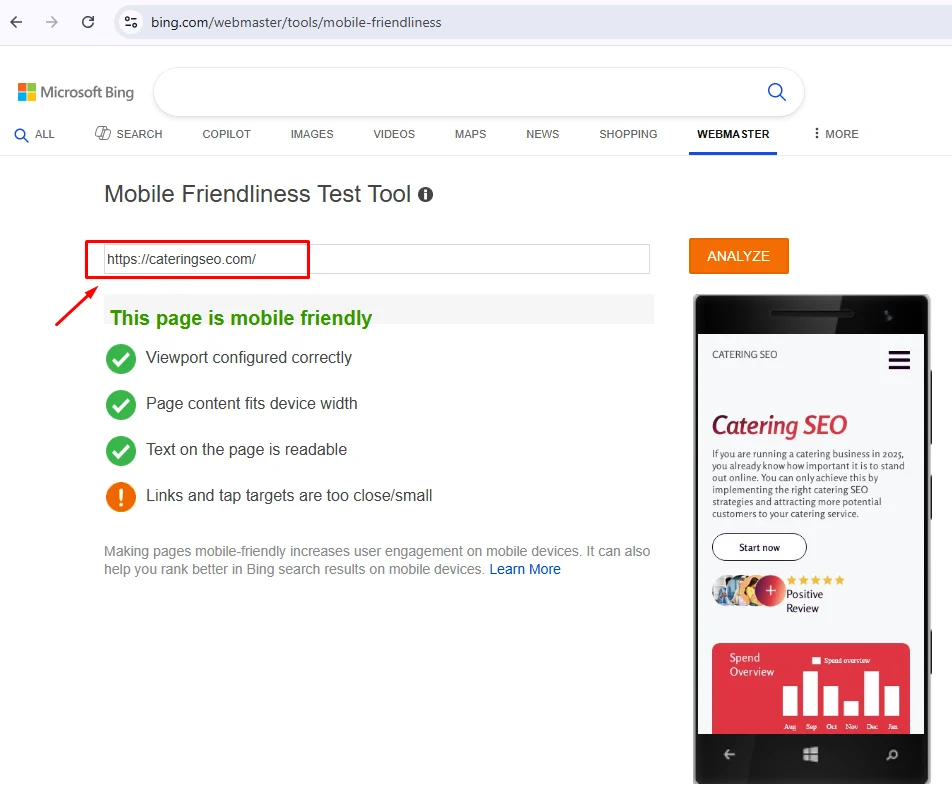
Google primarily uses the mobile version of a page for indexing. Use responsive layouts and make the same useful content available on both desktop and mobile. See Google’s mobile-first indexing guidance.
- Use correctly sized WebP or other optimized images, descriptive alt text and explicit image dimensions. Avoid lazy-loading the primary hero image unnecessarily.
- Make menus, pricing, links and enquiry forms easy to use on a phone; test tap targets and avoid sideways scrolling.
- Inspect key pages with PageSpeed Insights and Search Console. Fix major layout shifts, slow loading and unresponsive interactions.
- Check HTTPS, canonical URLs, XML sitemaps, crawlability, redirects and accidental noindex tags. Keep important pages reachable through ordinary links.
- Use structured data that accurately represents the business or article. Valid markup does not guarantee rich results.
Test your actual enquiry path on mobile rather than relying only on a performance score. Confirm that form submissions and click-to-call links work and that the team receives enquiries.
5. Build local visibility beyond your profile
Make your real service area clear on your website and keep your business details consistent across relevant listings. If you serve multiple locations, only publish separate pages when you can give customers meaningful local information such as delivery arrangements, venue experience or service availability.
Seek genuine mentions from local venues, event planners, wedding directories and business associations. Publish original event stories with consent and explain what your team provided. Avoid fake locations, purchased reviews and repeating near-me phrases unnaturally.
6. Earn relevant links and build trust
Useful links can come from real business relationships: a venue’s recommended caterer list, a local event recap, a food-industry publication or a guide created with a planner. Offer something genuinely useful, such as a menu-planning checklist or an event logistics guide.
Prioritize relevant audiences over link counts. Avoid paid links intended to manipulate rankings, automated directory blasts and mass guest-post schemes. Social media can help people discover and share your work, but social engagement is not a guaranteed direct ranking boost.
See Google’s search spam policies for practices to avoid.
7. Measure SEO against catering enquiries and bookings
Use Google Search Console to identify queries, landing pages, clicks and indexing issues. Use your analytics and enquiry records to track calls, form submissions, quotes and confirmed orders. Configure measurement in accordance with your privacy and consent obligations.
| Measure | What it tells you |
|---|---|
| Impressions and clicks by service page | Which relevant searches discover your business |
| Qualified organic enquiries | Whether visitors are a good fit for your services |
| Quote-to-booking conversion | Whether enquiries become events |
| Booked revenue and contribution | Whether the work supports business growth |
For example, 400 organic visits, 12 qualified enquiries and 3 confirmed orders would represent a 3% qualified enquiry rate and a 25% enquiry-to-booking rate. These are hypothetical figures, not a performance prediction. Compare periods of similar seasonality and event lead times.
Catering SEO checklist: what to do first
- Confirm your services, target customers, capacity and service area.
- Review your eligible Business Profile and website contact details.
- Research relevant keywords and assign them to the right pages.
- Improve your core service pages, mobile experience and enquiry process.
- Resolve technical indexing issues and add accurate structured data.
- Build genuine local relationships and publish useful supporting resources.
- Review qualified enquiries and booked work regularly.
If you are short on time, prioritize pages for your highest-value services before expanding the blog. For additional sales and marketing ideas, read how to grow catering sales and catering marketing ideas with examples. If you need professional help, compare providers by their understanding of your business, scope of work and transparent reporting, not ranking promises.
Frequently asked questions
How long does catering SEO take to work?
Timelines vary depending on the market, competition, site condition and search demand. Some technical fixes can take effect after recrawling, while improving competitive visibility may require months of sustained work. No fixed timeline or booking count is guaranteed.
What is the difference between SEO and paid ads?
SEO improves organic discoverability; paid ads buy advertising exposure while campaigns run. Both require investment. Compare their contribution to qualified enquiries and profitable bookings rather than assuming one channel is always cheaper.
Does social media help catering SEO?
Social media can expose your content to potential clients and partners, who may visit your site or link to it. It is not a replacement for technically accessible pages, useful content and local search fundamentals.
Do I need a Google Business Profile for catering SEO?
If your business meets Google’s eligibility rules, a verified profile can improve local discoverability and make contact information easier to find. Your website still matters for service details and conversions.
Can SEO guarantee a certain number of catering bookings?
No. Search performance depends on demand, competition, conversion and business capacity. A credible strategy measures progress and prioritizes improvements without guaranteeing rankings or bookings.